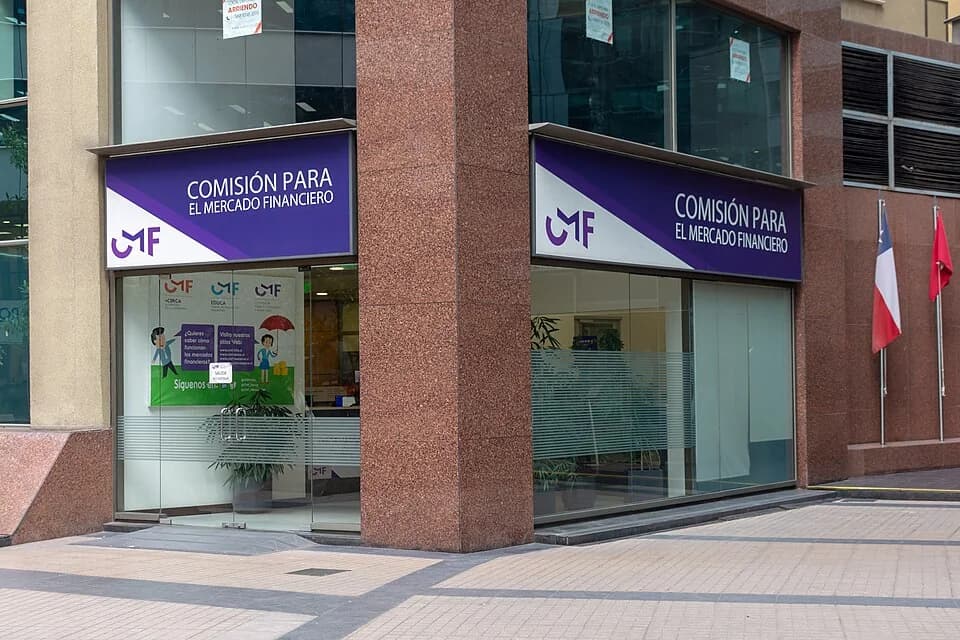
According to La Tercera, on Thursday the Supreme Court upheld, with costs, the ruling rejecting Michael Clark's challenge against the Financial Market Commission (CMF). This confirmed that the businessman should have launched a public tender offer when he took indirect control of Azul Azul, the concessionaire of Club Universidad de Chile.
The setback comes at a difficult time for Clark. This weekend marks two months since he was detained in the Capitán Yáber prison annex, charged in the Sartor case.
A tender offer works as an open invitation. When someone takes control of a publicly held corporation, the law requires them to offer to buy the remaining shareholders' shares on publicly disclosed terms. This prevents minority shareholders from being trapped under a new owner they did not choose.
The dispute began with a transaction in two steps. Inversiones Antumalal Limitada, Clark's company, bought 90% of the units in Fondo de Inversión Privado Tactical Sport. That fund owned a majority stake in Azul Azul, so Clark indirectly acquired 63.07% of the concessionaire's Class B shares.
Between December 2024 and January 2025, the CMF issued resolutions questioning Clark's failure to launch a tender offer. The businessman challenged them before the Santiago Court of Appeals, which rejected his challenge alleging illegality in September 2025. He then appealed to the Supreme Court.
Clark's defense argued that there was a conflict between two laws: the Unified Funds Law (No. 20,712) and the Securities Market Law (No. 18,045). The court rejected that contradiction. It held that both regulatory frameworks "can be complied with simultaneously".
The ruling clarified that the CMF required the tender offer because of the takeover of Azul Azul, rather than the purchase of fund units. "It is that takeover, and not the transaction involving the units, that obliges him to make the offer," the judgment stated.
The Court used Clark's own notices as evidence. On January 8 and 14, 2025, the businessman informed the CMF that a company he owned would launch an offer for 100% of Azul Azul's Class B shares, without offering fund units.
The underlying argument is practical. If Clark's position were accepted, placing a private investment fund between the buyer and the shares would be enough to avoid a tender offer. According to the ruling, that would deprive minority shareholders of the protection lawmakers intended to give them.
For Azul Azul's small shareholders, the ruling confirms their right to receive a buyout offer following the change of control. La Tercera's report does not specify whether the tender offer has already taken place or on what terms.
The judgment concluded that the CMF did not act unlawfully by requiring Clark to comply with Articles 54 and 199 of Law No. 18,045. Justices Adelita Ravanales, Jean Pierre Matus and Gonzalo Ruz signed the ruling. Acting judges Raúl Fuentes and Carlos Urquieta also participated in the decision but did not sign because their electronic signature devices were unavailable.