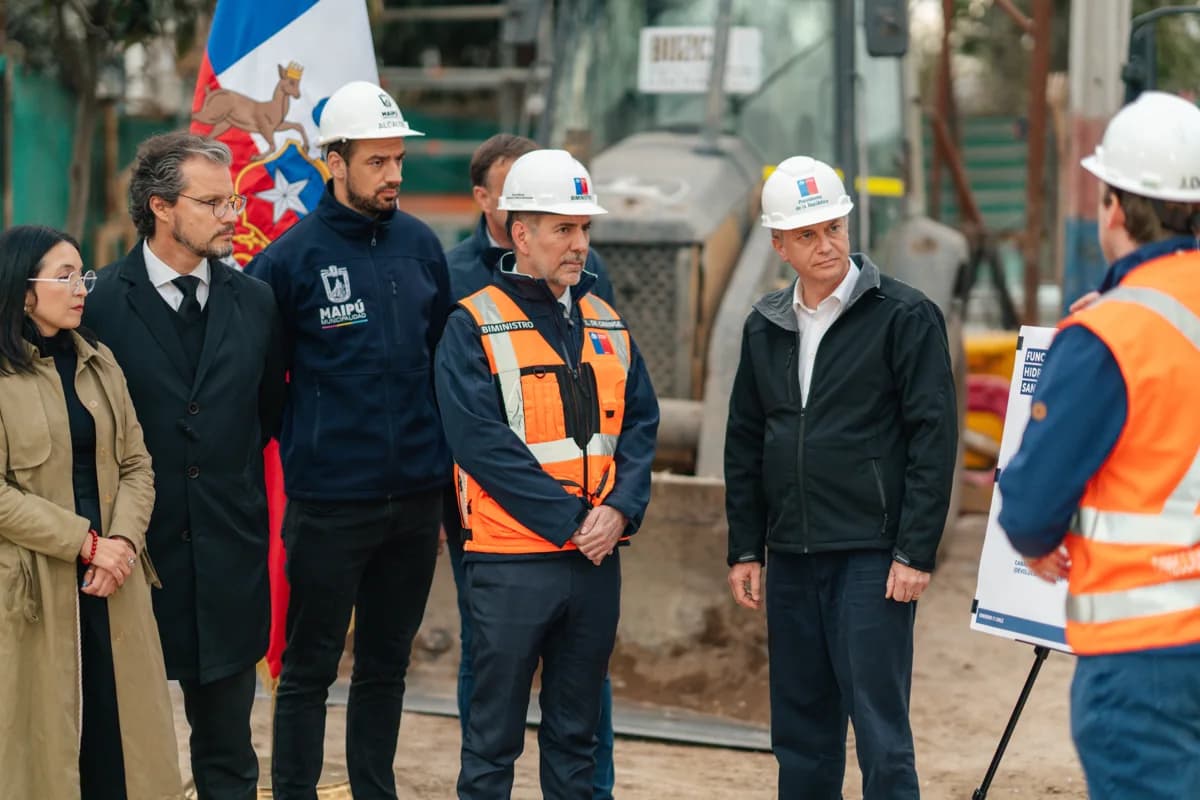
According to El Mostrador, President José Antonio Kast's government gave contradictory accounts of the debris flow in San Carlos de Apoquindo, in Las Condes. Containment barriers were also not installed despite technical warnings known months earlier. The outlet reports that the Prosecutor's Office is investigating what authorities did to prevent the disaster on Thursday, October 8.
According to the same report, a Cadem poll shows that 51% disapprove of the government's response. The article does not specify the poll's date or methodology.
Criticism intensified this Tuesday. Rain hit Santiago again, bringing hail, thunderstorms and flooding. The National Disaster Prevention and Response Service (Senapred) declared a Red Alert for the entire Metropolitan Region, five days after the debris flow.
In Ñuñoa, Mayor Sebastián Sichel challenged the government over resources. "What we need is resource management for emergencies, and today there is none," he told 24 Horas. According to the municipality's preliminary assessment, 15 homes were affected, seven with serious damage. The municipality responded to the emergency with four motor pumps, volunteer firefighters and support from the Regional Government.
Sichel is an independent and acknowledged voting for Kast. However, he had already expressed disagreements. On October 5, he accused the government of "amateurism" in public finances over cuts in the 2027 Budget, including the elimination of the "I Choose My PC" program.
Las Condes Mayor Catalina San Martín also criticized coordination between institutions. "An emergency cannot keep office hours," she warned on 24 Horas, questioning the state's bureaucracy in following up on warnings.
Claudio Alvarado, Minister of the Interior and Minister Secretary General of Government (Segegob), defended the official response. "A government does not operate on the basis of individuals; it operates through its institutions," he said on Tele13 Radio. During the first hours of the debris flow, Alvarado was in Chiloé and Undersecretary Máximo Pavez was in Rapa Nui, both on official business.
The minister said he remotely chaired the disaster risk management committee (Cogrid) from 18:30 on Thursday. Kast coordinated the response from La Moneda. The government also defended its decision not to issue an evacuation alert through the Emergency Alert System (SAE). Its argument is that the debris flow was sudden and that evacuating without identified safe areas could cause more confusion.
The warnings had come earlier. In February, the National Geology and Mining Service (Sernageomin) identified a high risk of mass movements in the area burned by the December 2025 wildfire. In June, academics from the Catholic University again warned about the terrain's fragility.
Despite this, the municipality's dynamic barriers were not installed. According to a municipal timeline, the contract for the work was signed on October 5, three days before the debris flow.
The episode exposed a contradiction within the cabinet. Public Works Minister Louis de Grange initially stated that the mesh barriers were installed and had failed to withstand the debris flow. San Martín contradicted him. De Grange later acknowledged that the work was still in the preparatory stage.
Six researchers from the Center for Climate and Resilience Research (CR2) identified a chain of factors that increased the basin's vulnerability, including drought and vegetation degradation. The available text from El Mostrador does not detail the rest of the analysis or the status of the Prosecutor's Office investigation.