The People's Party (PDG) caucus is considering a new withdrawal of pension funds. This time, it would target people who have been unemployed for six months or more. Several officials in José Antonio Kast's government have already rejected the idea.
According to T13, the proposal appears in a nine-page internal report titled Escenario previsional y alternativas de retiros. It was prepared by Iván Otárola and is dated October 11. Party sources say Deputy Pamela Jiles proposed the idea and the party commissioned the study to make a bill technically and politically viable.
The caucus says no decision has been made yet. The proposal remains under review.
The document estimates that some 437 thousand people have been looking for work for six months or more. Of those, around 400 thousand would be people who lost their jobs, and nearly 270 thousand would have pension funds available.
The main option is called "Emergency Use with Repayment." It works as a loan from one's own savings: members use part of their savings and then repay them through deductions from their wages. In a central scenario, some 215 thousand people would participate, releasing US$410 million, equivalent to 0.11% of GDP.
The amounts depend on account balances. Those with between $2 million and $10 million could withdraw up to $1.6 million, or up to $2.4 million on special grounds such as prolonged unemployment, serious illness or the risk of their home being auctioned off. For balances between $10 million and $40 million, the cap would be $4 million. Above $40 million, the maximum would reach $6 million.
For unemployed people, repayments would begin six months after returning to work, through installments deducted from their wages.
The report includes a second alternative: a one-time, permanent withdrawal of 15% of the funds, capped at 60 UF ($2.4 million). Only those with savings above 50 UF would qualify. It would reach some 175 thousand potential beneficiaries.
The study itself acknowledges the cost of the three withdrawals approved between 2020 and 2021, which took US$45,809 million out of the system. It estimates that they accounted for between 16% and 30% of inflation in 2022, with a central estimate of 23%. That year, the CPI (Consumer Price Index) reached 12.8%, and the Central Bank raised its monetary policy rate to 11.25%.
According to the report, the targeted option would have an impact of just 0.02 percentage points on inflation over twelve months. It also cites estimates from the Superintendency of Pensions: a new general withdrawal of 10% would leave more than four million members with no balance.
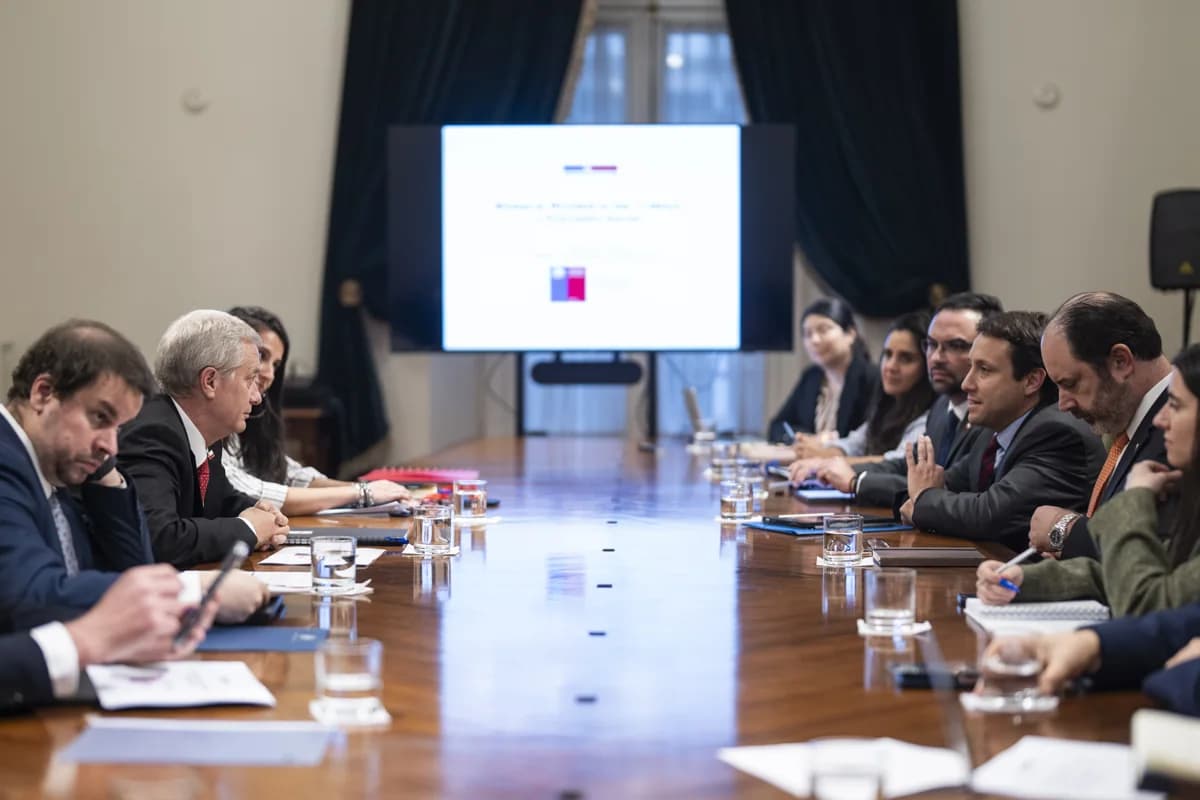
The government presented a united response. "History has taught us that pension withdrawals were not good policy. They not only generated a lot of inflation, they depleted pension funds," said Labor Minister Tomás Rau. Economy Minister Daniel Mas called it "a very bad idea". Superintendent of Pensions Joaquín Cortez told Pulso: "We already know the harm caused by withdrawals".
La Moneda also circulated a briefing note titled "Retiros no: la receta que ya fracasó". It contrasts the PDG initiative with its Chile Despega program, which aims to mobilize $1.3 trillion to create more than 100 thousand jobs.
The discussion coincides with a shift toward opposition by Franco Parisi, the PDG leader and former presidential candidate. Parisi was instrumental in the negotiations that secured support for the sweeping economic reform during the government's first months. This week, however, he called the agreement with Autopista Central to reduce electronic toll charges in exchange for extending the concession by 20 months a "very bad deal for Chile".
Days earlier, Parisi questioned the debt figures in the 2027 Budget and the government's request to raise the borrowing ceiling to US$25,000 million. The PDG has yet to decide whether to introduce the withdrawal bill in Congress.