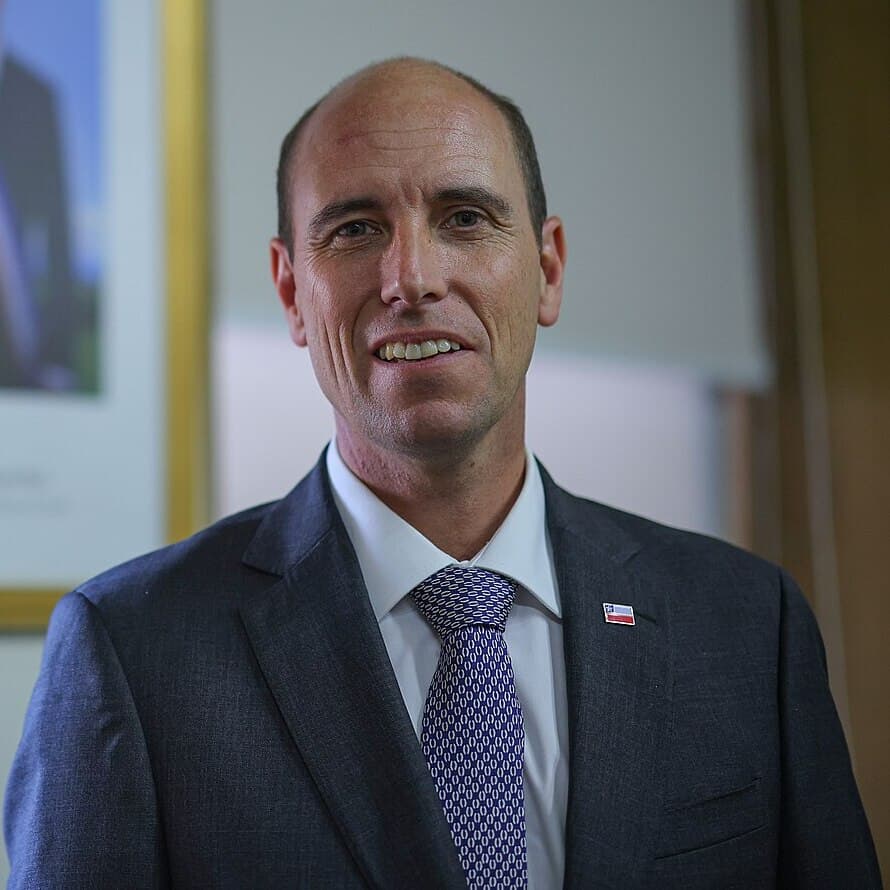
The Minister of Public Security, Martín Arrau, backed the constitutional reform bill put forward by a cross-party group of senators. The text seeks to replace the security reform promoted by the government of José Antonio Kast, which met rejection from all sides in the Congreso (Chile's National Congress).
According to CNN Chile, the authors of the proposal are Arturo Squella (Republicanos), Andrés Longton (RN) and Pedro Araya (PPD). In recent days they were joined by Karim Bianchi (independent) and Iván Flores (DC).
Arrau said that "we will be able to address not all, but a large part of the matters" in the reform the Government presented. Speaking to Radio Duna, as reported by La Nación, he acknowledged that the new text deals with those issues "in a different tenor, with a different intensity".
That difference in intensity explains the new proposal. According to initial information, the reform focuses on three pillars: organized crime, the prison system and a new state of emergency. The minister mentioned a stronger differentiated prison regime run by Gendarmería (Chile's prison service) and an improved state of emergency with a preventive focus. He also highlighted that the bill paves the way for a list of criminal organizations.
Arrau also acknowledged the differences. He said the proposed state of exception is "not identical" to the one the Government put forward. He added that some issues, such as reforms to the Código Penal (Penal Code), may be left out of this bill.
The minister took responsibility for the cost of the first attempt. "There was political damage, but what matters to me is results", he said. Responding to criticism over the lack of prior dialogue, which came even from allied parties, he said: "If we want to achieve cross-party support, it has to be less intense".
Sources do not fully agree on the fate of the original bill. La Nación reported that the Government considered it closed. However, when asked about a possible withdrawal, Arrau said that depends on the Ministerio Secretaría General de la Presidencia (Segpres, the ministry that handles the Government's legislative agenda): "In this Congress there are thousands of bills that are left sitting there; it will stay there or it will be withdrawn".
Arrau denied that relations with Congress have deteriorated and pointed to progress on the security agenda. Among the advances he mentioned the flagrancy law, which doubles the time limits, and the "antipelotazos" law, which increases penalties for bringing prohibited objects into prisons.
His remarks came after the Cámara de Diputados (Chile's lower house) approved the joint committee report on the Rules for the Use of Force (RUF), which spent three years in the legislative process. The minister anticipated that the senators' reform will face a lengthy legislative process and may be amended during parliamentary debate.