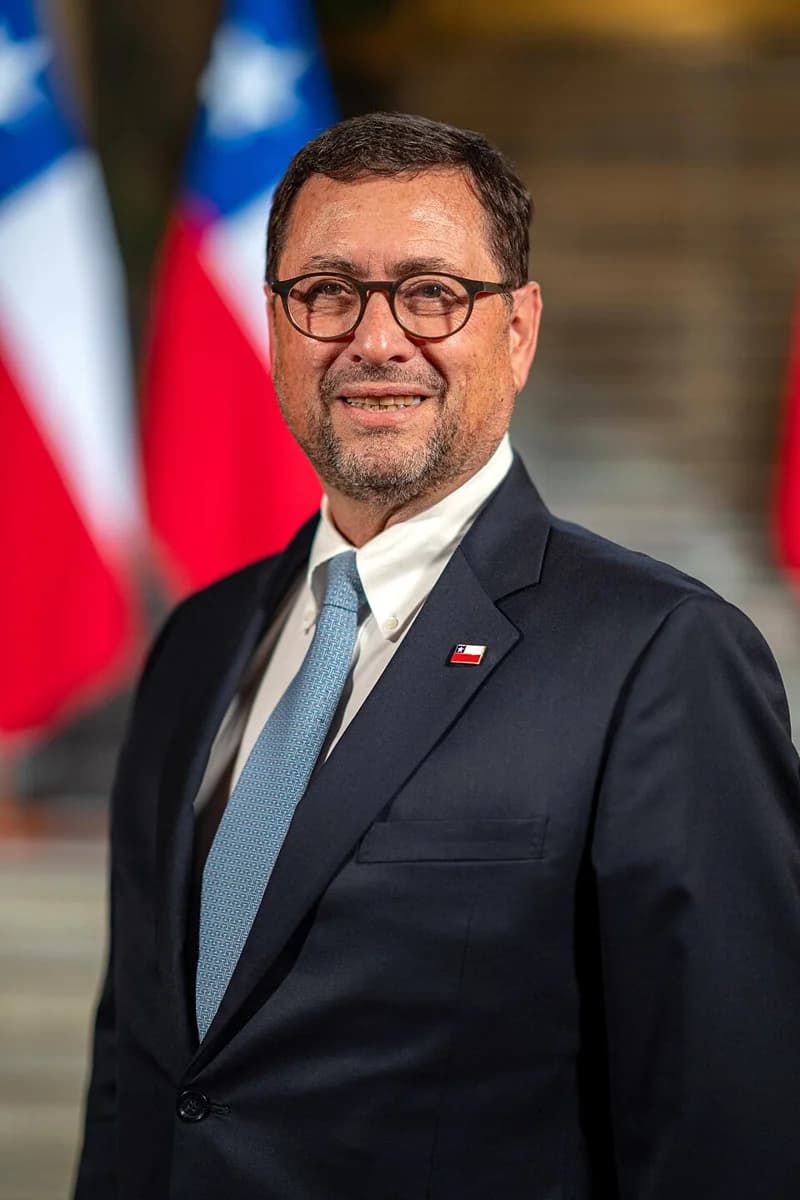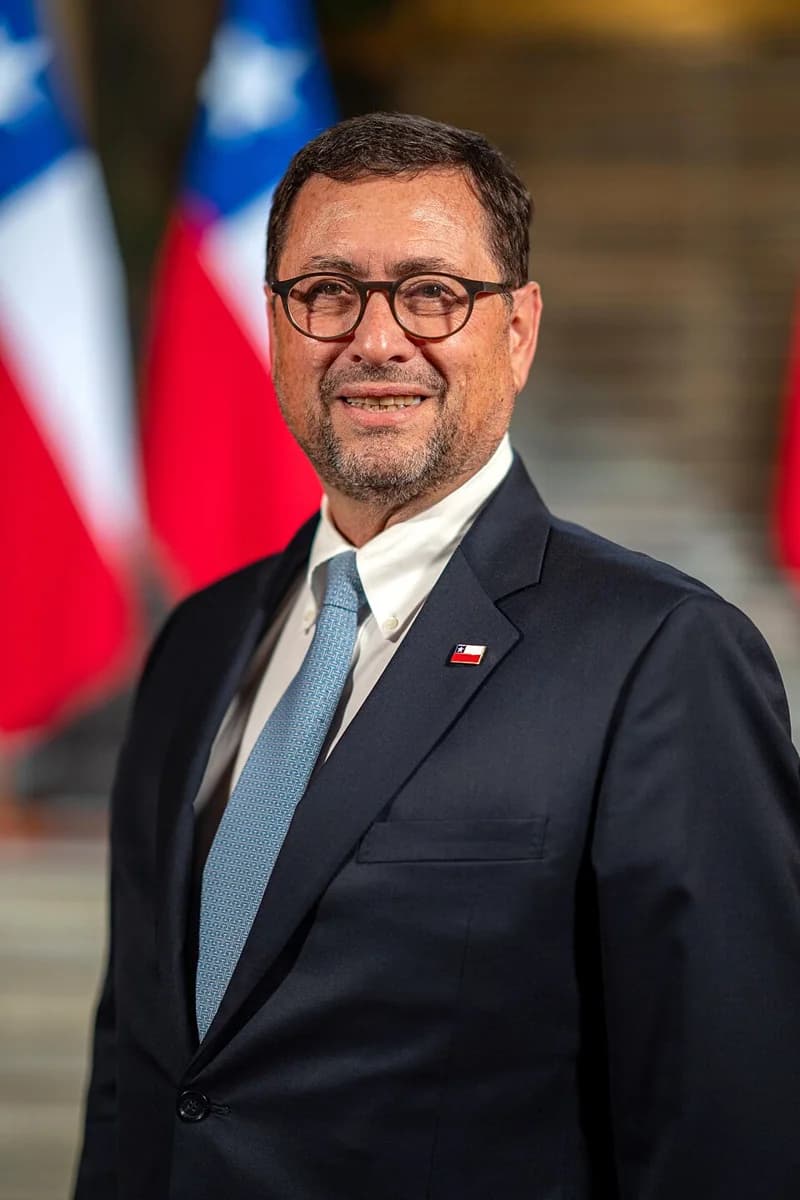
U.S. Ambassador to Chile Brandon Judd on Wednesday made his country's help in the Strait of Magellan conditional on Chile working on Washington's interests. He spoke in Santiago at the "Global Trade Day" forum organized by Compañía Sud Americana de Vapores (CSAV), the Chilean shipping company.
According to Ex-Ante, Judd announced he would not give a speech and would only take questions. He first discussed the tariff negotiation in front of the Undersecretary for International Economic Relations (subsecretaria de Relaciones Económicas Internacionales), Paula Estévez. Then came China.
"We don't care if you trade with China. That is not a problem," he said. However, he warned that the U.S. is concerned about strategic infrastructure, in reference to the planned undersea cable between Chile and China. He then delivered the line that sparked the controversy: "if you want a country that will help protect your rights over the Strait of Magellan", Chile would have to "work with us on the things that are also important to us."
The ambassador cited as examples the Chinese space station in Neuquén, Argentina, and Peru's Chancay megaport, operated by Chinese company Cosco. "Why would anyone want to give up their sovereignty?" he asked. He also criticized former presidents Gabriel Boric and Michelle Bachelet for questioning the Shield of the Americas, the security alliance promoted by Washington. He said "certain people are considering running again."
The government responded immediately. Foreign Minister Francisco Pérez Mackenna was leaving a special session of the Senado (Chile's Senate) on Chile's accession to the Shield of the Americas. "The Strait of Magellan was, is and always will be Chilean," he declared. He added that Chile has defended its sovereignty on its own "for 200 years."
According to La Tercera, the foreign minister did not rule out sending a protest note. "I am not ruling anything out until the evaluation is finished," he said.
In Congress, the Senate's governing board issued a statement. It said Chilean sovereignty "is not up for discussion nor does it depend on the backing" of any foreign nation. Senate Vice President Iván Moreira (UDI) wrote on X about the ambassador's "mistreatment" and asked the government for "greater firmness." Opposition lawmakers demanded a protest note.
Hours later, Judd responded with a statement reported by CNN Chile. He said his words "were clearly taken out of context" and that at no point did he place conditions on Chile's sovereignty. "I enjoy a good soap opera as much as anyone, but this drama is being twisted," he wrote. He also thanked Defense Minister Fernando Barros, who had asked that the context of his remarks be considered.
The episode adds to a long record. Judd, a former leader of the U.S. Border Patrol with no diplomatic career, arrived in Chile in November 2025. His comments about Boric and the presidential election already prompted a protest note. He defended the revocation of visas for three Transportation officials over the Chinese cable. In July he criticized ministers Jaime Campos and Barros for objecting to the tariff increase.
On Tuesday, in a webinar hosted by the Fundación Chilena del Pacífico, Judd also opened another front. He said "there is no Antarctica that belongs to Chile," because the treaty system does not recognize sovereignty claims. The Antarctic Treaty has a review scheduled for 2048.
Who wins and who loses is clear for now. José Antonio Kast's government is negotiating tariffs with Washington and debating in the Senate its entry into the Shield of the Americas. Each of the ambassador's controversies makes that political support more costly. The decision on a possible protest note rests with Pérez Mackenna, who said he will decide it "on the merits of the things that have been said."