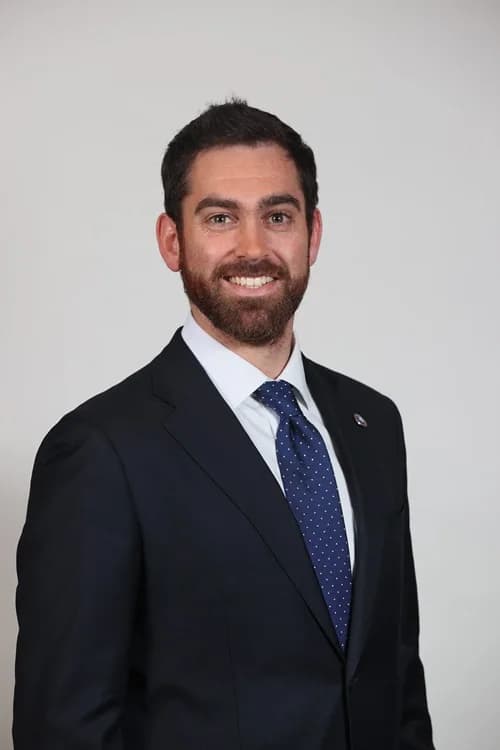
Between July 2005 and June 2026, Fonasa and the Isapres recorded 62,554,296 GES cases. Health Minister May Chomali and Superintendent of Health Fernando Riveros presented the figures at the Superintendency of Health's Public Assistance Office in Santiago.
La Tercera and Radio Universidad de Chile reported the information. Authorities used the event to urge people to learn about their rights and file complaints when care deadlines are missed.
GES stands for Explicit Health Guarantees. Law 19,966 created this system, which covers 90 health conditions for everyone enrolled in Fonasa or an Isapre. These include depression, hypertension, diabetes, cancer and Alzheimer's disease. It also includes hearing aids for people over 65 with hearing loss and treatments to quit smoking.
The law provides four guarantees: access, timely care, quality and financial protection. In simple terms, patients must receive care before a set deadline, from an accredited provider and for an amount they know in advance. Care through Fonasa is free. At the Isapres, copayments are capped at 20% of the reference fee.
Of the cumulative cases, 59,325,399 were recorded by Fonasa and 3,228,897 by the Isapres. In the first half of this year alone, 1,987,954 new cases were added. Riveros clarified that the figure counts cases rather than people, because someone may have more than one covered health condition. According to Radio Universidad de Chile, the figures are provisional.
As of June 2026, 17,177,933 cases remained active, representing 27.5% of the total. Hypertension tops the list with 2,988,724, followed by type 2 diabetes mellitus with 1,613,727 and oral health with 1,501,167. Cervical cancer leads Fonasa's cumulative total, with more than 10.5 million cases. At the Isapres, depression ranks first, with 410,651.
Chomali warned that some people do not use the guarantee, increasing their out-of-pocket costs. "If people actually used their guarantee, we would drastically reduce out-of-pocket spending, mainly on medicines," the minister said.
The process begins at the medical appointment. The healthcare professional must tell you whether your diagnosis is covered by GES and complete the GES Confirmation Form. That document specifies the GES Network where you must receive care, and you lose the guarantees if you receive care outside it. At Fonasa, the system determines the location. People enrolled in an Isapre can complete the process online or in person.
If the maximum deadline passes, you have 30 days to file a complaint with Fonasa or your Isapre. They have two days to assign you another provider, which must see you within a maximum of 10 days. If that does not happen either, you have 15 days to contact the Superintendency, which has two days to appoint a third provider with five days to see you.
Between January and September 2026, the Superintendency received 2,630 complaints about cancers covered by GES. The most frequent concerned breast cancer (632), colorectal cancer (353) and cervical cancer (269). Riveros interpreted the figure optimistically: "The fact that complaints are coming in may indicate that more people know their rights and are exercising them," he said.
The superintendent noted that each service has its own deadline, and that confirming a diagnosis does not take the same amount of time as starting treatment. Information sheets for the 90 health conditions are available at superdesalud.gob.cl. Inquiries are accepted at 600 836 9000 and at the office at Alameda 1449, Tower 2, as well as at regional offices.