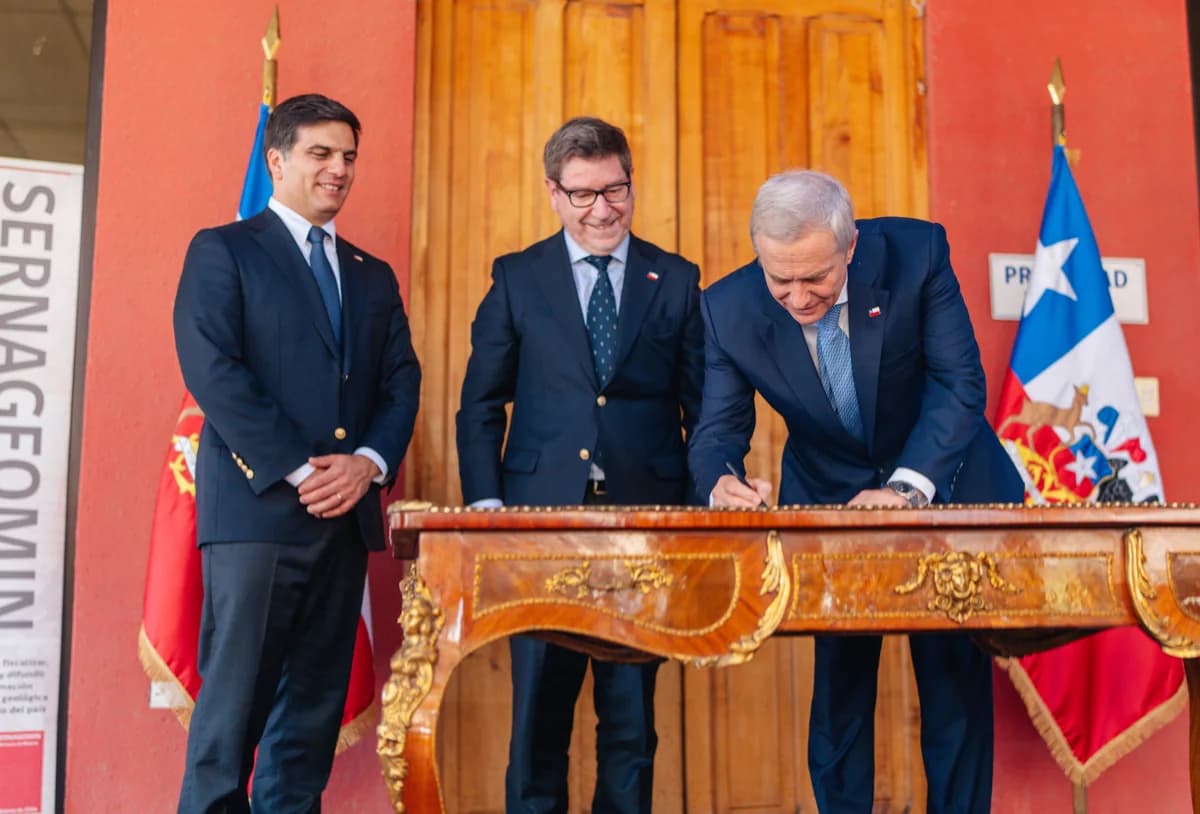
The ministro de Hacienda (Finance Minister), Jorge Quiroz, acknowledged on Thursday that the Government's projection of ending 2026 with inflation at 3.8% "is challenging". He spoke after it became known that the September IPC rose 0.4%.
According to CNN Chile, Quiroz also stressed that controlling inflation does not depend on the Executive. "Let us remember that inflation and the IPC are a responsibility of the Banco Central", he said.
The IPC (Índice de Precios al Consumidor, the consumer price index) measures how much the price of a basket of goods and services bought by households changes. It works as a gauge of the cost of living, and it is published every month by the Instituto Nacional de Estadísticas (INE, Chile's national statistics agency).
In September, the index rose 0.4% month on month, a moderation from 0.6% in August. Inflation stands at 4.0% so far this year and 4.1% over twelve months, far from the 3% target pursued by the Banco Central. Analysts had expected a 0.5% rise.
Transport and food accounted for much of the increase. In the ninth month, gasoline rose 2.7% and diesel climbed 10.2%. By contrast, the insurance and financial services division fell.
Quiroz explained that the Banco Central, the autonomous body in charge of price stability, is the one that must act. Its main tool is the interest rate: if it raises it, credit becomes more expensive and consumption cools, which helps curb prices. "We would like this to keep coming down", the minister said, and he called for the monetary measures needed to keep inflation in check.
The 3.8% figure appears in the latest Informe de Finanzas Públicas (Public Finance Report), the document Hacienda uses to project the economy and fiscal accounts. Asked about pressure from the dollar and oil, Quiroz said there could be "a slowdown in price growth" and that the variables will have to be watched.
On whether the rise forces a review of the 2027 Budget, the minister said the amounts are set in law. If relevant changes occur during the year, they are adjusted through amending decrees.
Quiroz also referred to the Imacec, the monthly economic activity indicator. He attributed its slowdown to a trend that had been under way since October 2025 and, above all, to copper: in August, mining output fell 17%, which he linked to a lack of investment in previous years.
The biministro de Economía y Minería (minister of both Economy and Mining), Daniel Mas, warned that the data confirms inflationary pressures "are still present". He attributed the hit to household budgets to the Fiestas Patrias (Chile's national holidays) and to external factors that pushed up fuel prices.
For your wallet, the concrete effect comes through the UF (Unidad de Fomento, Chile's inflation-indexed unit of account): after the September IPC, the unit will rise $164.52 in one month to reach $41,295.46, making rents, mortgage payments and health plans set in UF more expensive in pesos.