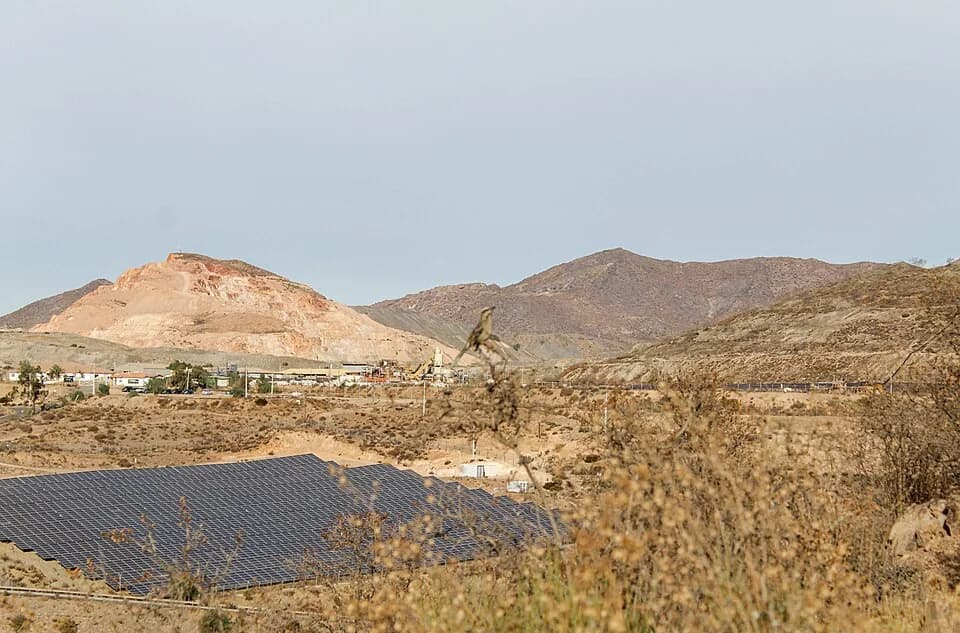
The unions representing workers at Minera Esperanza and Distrito Centinela began a legal strike at 8:00 a.m. on Wednesday at Minera Centinela, an Antofagasta Minerals mining operation in the Región de Antofagasta (a region in northern Chile). Antofagasta Minerals is the mining arm of the Luksic group.
According to Diario Financiero, the stoppage began after mandatory mediation before the Inspección del Trabajo (Chile's labor inspectorate) ended without an agreement. That mediation is the last formal round of dialogue before a strike that has already been voted on takes effect.
At the heart of the dispute is what the unions call discrimination in pay and benefits. They say workers from another union who do the same jobs receive better conditions. They are asking for a mechanism that closes that gap and keeps it from happening again while the collective agreement is in force.
In a joint statement quoted by La Tercera, union leaders said that "the company was not willing, in the mediation, to take responsibility with a satisfactory alternative". They added that, given that refusal, the mediator had to close the process without an agreement.
The company had not commented by the time the Diario Financiero report was published. However, the day before, Minera Centinela said it remains open to dialogue and that it "does not discriminate against its workers based on their union membership". According to the company, the differences between contracts stem from how earlier negotiations evolved and from the particular features of each process.
The disagreement has dragged on for weeks. The mining company presented its last offer on Wednesday, September 23, and the unions rejected it. They then approved the strike with 98.73% of the votes, with 100% of eligible members taking part. It is the first time the two organizations have negotiated with a joint proposal, and together they have more than 700 members.
The logistics are already set. Workers who were on site must leave in an orderly way and report to a strike camp set up outside the mine, near the entrance gate. Workers who live between Arica and Vallenar must travel to Sierra Gorda, where the unions will organize transport. Those living in the Región de Coquimbo (a region in north-central Chile) and further south must head to Santiago.
To give a sense of what is at stake: Minera Centinela, located 21 kilometers from Sierra Gorda, produced 240,400 tonnes of copper in 2025, along with molybdenum, gold and silver. Antofagasta Minerals owns 70% of the operation and Japan's Marubeni Corporation holds the remaining 30%. None of the sources has yet reported how much production is lost for each day of the stoppage.
The timing is sensitive. Antofagasta Minerals approved a second concentrator for the operation, a plant that separates copper from crushed rock, which would add about 170,000 tonnes of copper equivalent per year from 2027. In addition, Chile's copper supply has been constrained by operational problems, rain, snowstorms and lower ore grades, meaning rock with less copper per tonne.
This is not the only tense negotiation this year. In May, the Centinela Supervisors' Union approved a strike with 77.21% of the votes from 702 participants. At Zaldívar, another of the group's operations, the company and union reached a wage agreement that averted a stoppage.
The unions said they will keep the strike peaceful "for as long as necessary" and called on the company and the Luksic family to change their stance.