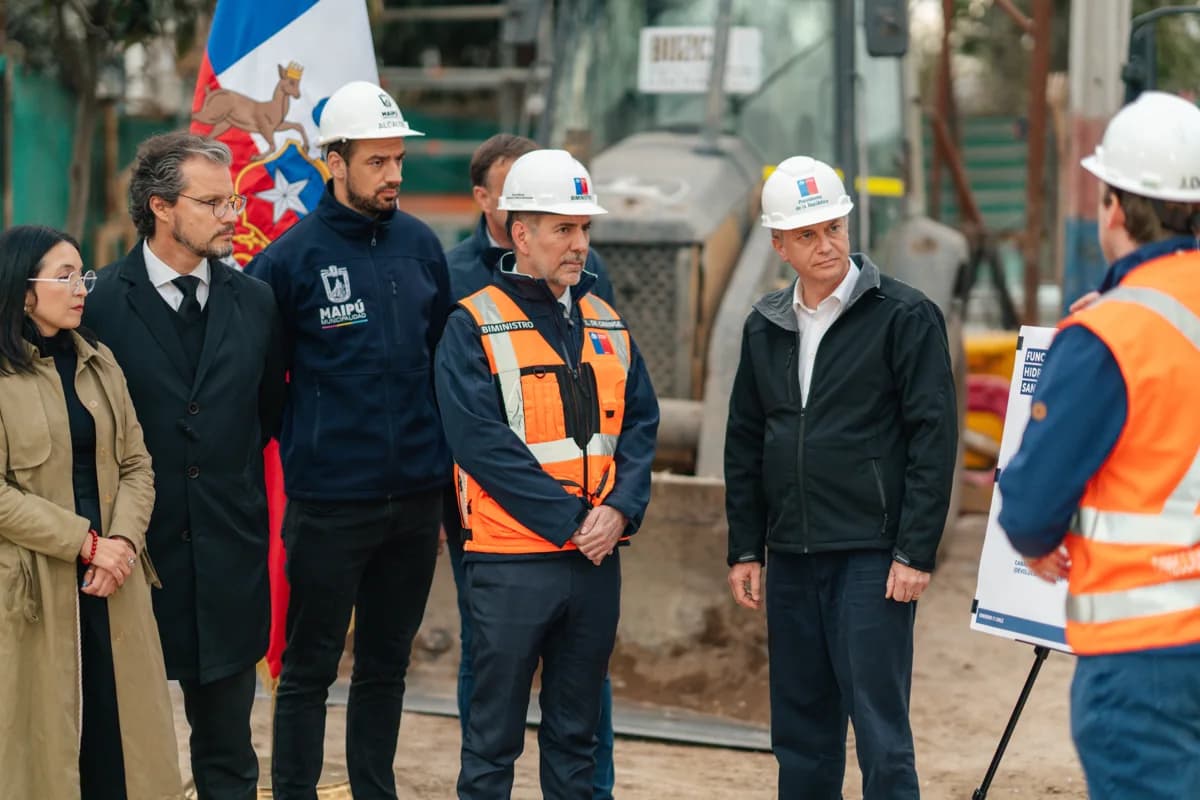
The Ministry of Housing and Urban Development (Minvu) announced this Tuesday the first public tender for the FRIL Study, an analysis of natural hazards in Santiago’s Andean foothills. The decision brings forward work scheduled for later and follows recent debris flow emergencies in the Metropolitan Region.
According to Emol, the acronym FRIL encompasses the four risks to be assessed: fire, mass movement, flooding and liquefaction. The latter is the phenomenon in which saturated soil loses strength. The study is part of the update to the Metropolitan Regulatory Plan 2030, the instrument that governs the capital’s urban growth.
The analysis will cover the foothill strip between Colina and San José de Maipo, which includes nine municipalities. In a quote reported by CNN Chile, Minister Iván Poduje placed the southern boundary in Paine. G5 Noticias reported that more than 44 ravines would be examined, although the body of the same article gives the figure as more than 30.
"We have decided to bring forward the risk studies that are part of the Metropolitan Regulatory Plan," Poduje explained. According to CNN Chile, the minister added that the debris flow in Las Condes "demonstrated the need to update this study".
The minister said prevention requires action on two fronts. On one hand, infrastructure to channel and retain flows so they reach urban areas with little force. On the other, regulations governing growth in the foothills.
Minvu’s timetable sets November for the tender specifications and December for publication. Bidding will be open in January and February, and the contract is expected to be awarded in March 2027. The study will take a maximum of 240 days and cost approximately $750 million.
Poduje projected preliminary results in June and completion around October of next year, so implementation of the measures can begin. The findings will help municipalities guide mitigation works through 2041, when Santiago will mark 500 years since its founding.
Las Condes Mayor Catalina San Martín described the announcement as "a ray of hope" and praised the ministry’s speed. According to the mayor, the study will give foothill municipalities clarity about the interventions needed in their territories.
The initiative includes an intersectoral working group with the mayors of municipalities in risk areas. The Directorate of Hydraulic Works (DOH) of the Ministry of Public Works will also participate, and the National Geology and Mining Service (Sernageomin) will oversee the process. Minvu expects to bring together geographers, geologists, architects and other specialists.