
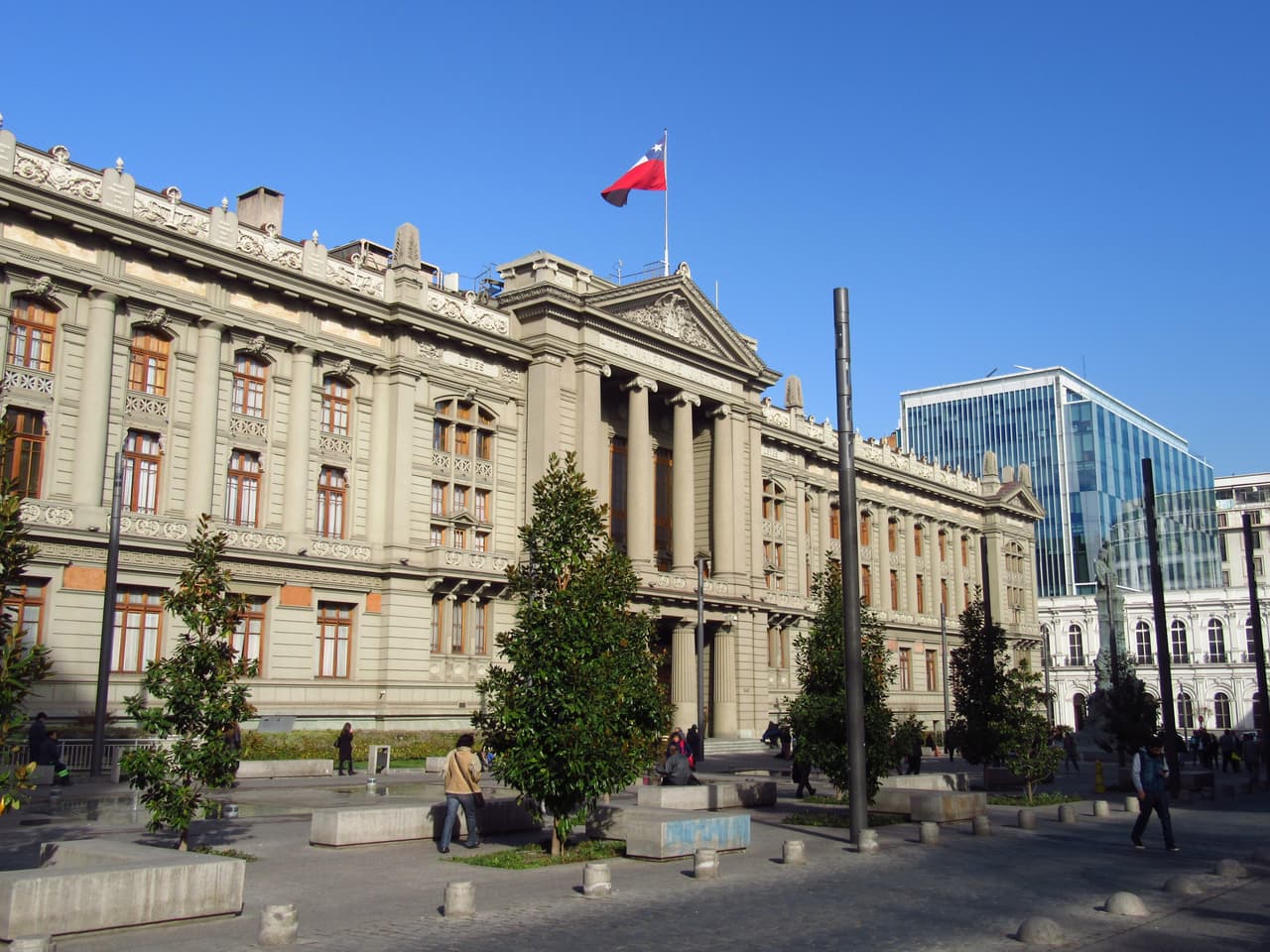
The Third Chamber of the Corte Suprema (Chile's Supreme Court) has yet to decide whether to uphold, modify or annul compensation awards totaling more than $13 billion pesos for the relatives of the 81 inmates who died in the fire at the San Miguel prison on December 8, 2010.
CNN Chile reported this based on a review of the case published by Radio Biobío. According to both outlets, the court has repeatedly postponed its review of the case. The sources do not give the case number or a date for the hearing.
The amounts were set in July 2024 by the Corte de Apelaciones de Santiago (Santiago Court of Appeals), which reviewed the first-instance ruling of the 7° Juzgado Civil de Santiago (7th Civil Court of Santiago), presided over by Judge Carolina Ramírez. The appeals court raised the total from about $3,800 million pesos to more than $13 billion pesos.
The ruling benefits more than 300 relatives of those who died. It also covers 13 inmates who survived with injuries, whom the first-instance judge awarded between $5 million and $9 million pesos.
The increase reflects a rise in the reference table. For parents, children and partners who proved their emotional bond, the amount went from $30 million to $80 million pesos. For siblings, it rose from $5 million to $25 million pesos.
The Corte de Apelaciones found that the earlier sums were "meager, insufficient to even minimally compensate for the serious harm" suffered by the relatives. It also recognized the right to compensation of another 18 people who had been unable to prove their kinship, and of four cohabiting partners who had been excluded.
One of those cases is that of the partner of Alejandro Vásquez, 22, whose son was born while he was in prison. The judge had rejected her claim, finding that cohabitation had not been proven. The Court awarded her $80 million pesos, considering the stable relationship and the child they had together sufficient.
The appeals court also overturned the reduction to $12 million pesos that the judge had applied to the mother of the inmate who, according to the first-instance ruling, set fire to the mattress. It set her award at $80 million pesos, the same as the other mothers.
The Consejo de Defensa del Estado (CDE), the body that represents the State in court, filed cassation appeals on both procedural and substantive grounds against that ruling. These appeals ask the Corte Suprema to annul a judgment for procedural errors or errors in applying the law. The CDE is asking for the entire lawsuit to be dismissed, arguing that conditions at the prison were the result of budget decisions and that the inmates themselves started the fire.
The families also appealed to challenge the amounts. Some of their lawyers argue that psychological reports documenting the harm they suffered were wrongly disregarded.
According to Radio Biobío, the fire started at 5:34 a.m., when inmates in the south wing of cell block 5 set a mattress on fire during a fight, in a dormitory where 71 people slept. 66 inmates from the south wing and 15 from the north wing died, all from asphyxiation.
In the criminal proceedings, the Fiscalía (Public Prosecutor's Office) charged eight Gendarmería (Chile's prison service) officers and took them to trial; they were acquitted in 2014. The civil case before the Third Chamber is now the route the families still have open, almost 16 years after the tragedy.