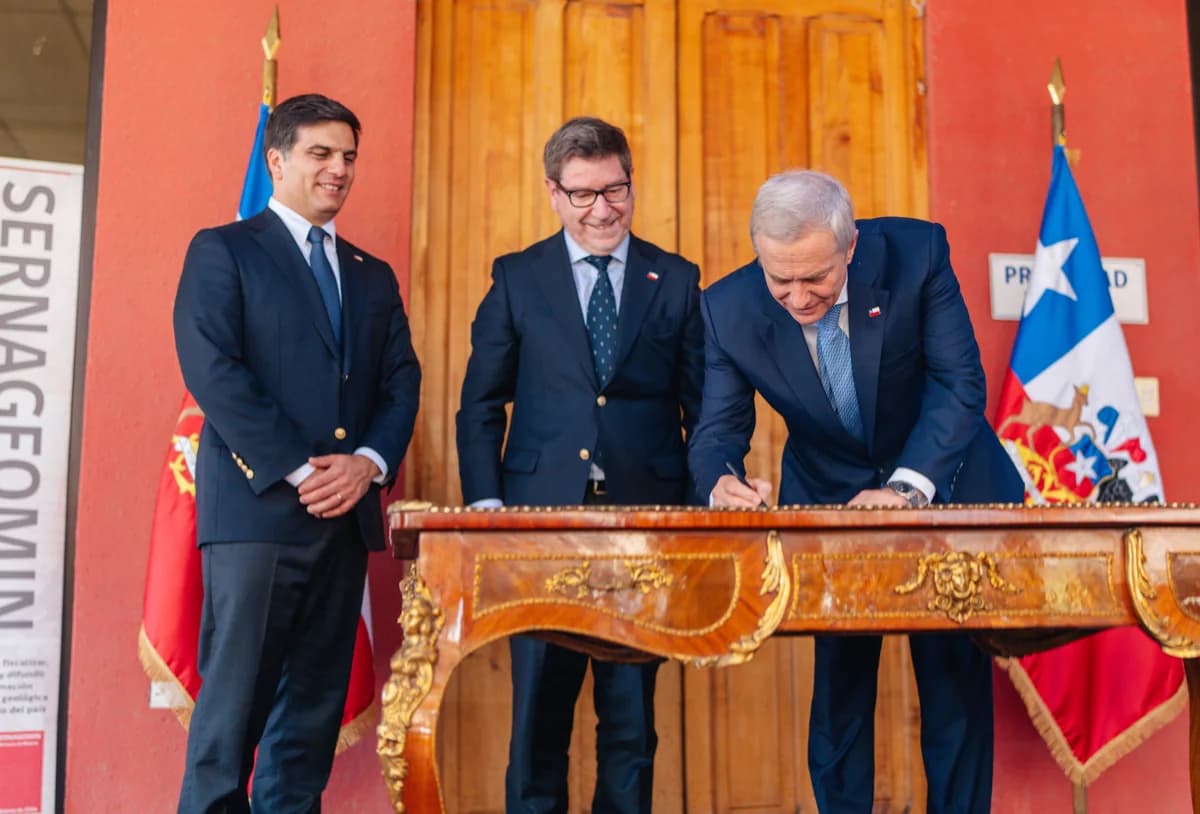
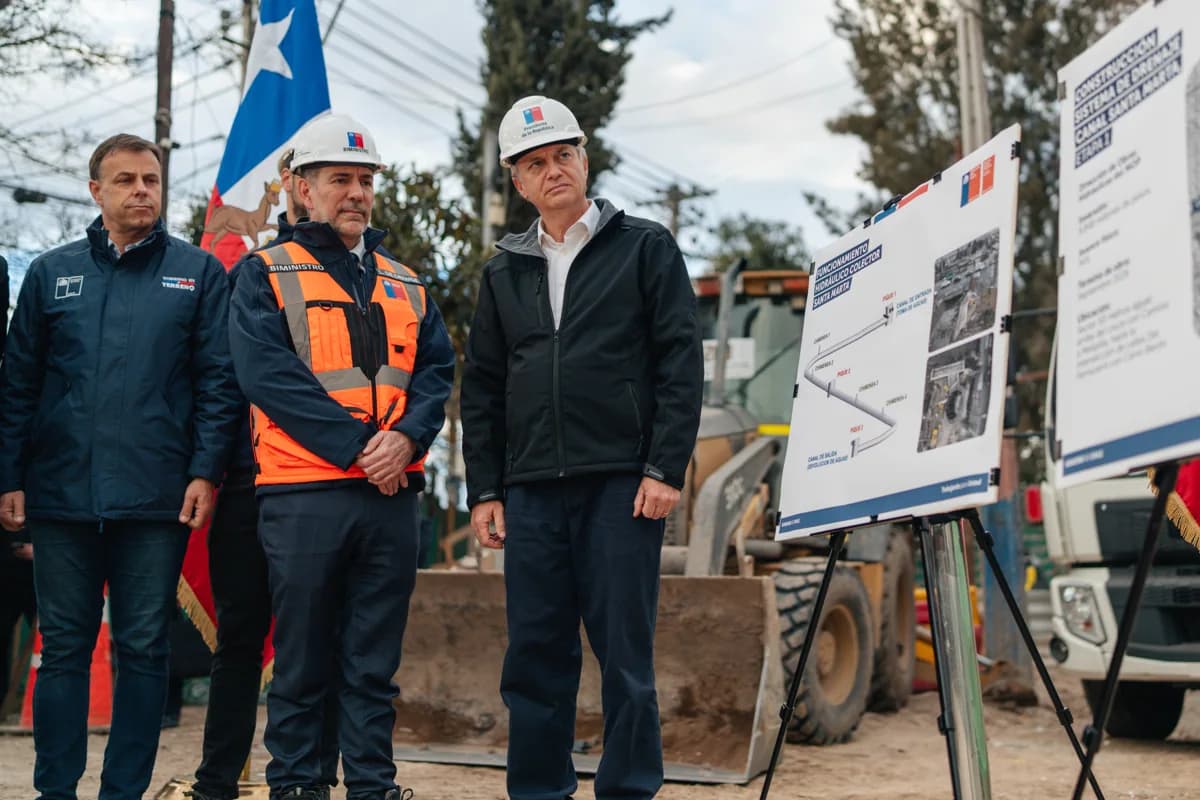
The Ministerio de Minería (Ministry of Mining) will have 0.4% less funding in 2027 than this year, according to the Budget bill the Government sent to the Congreso (Chile's national legislature). The exact size of the cut is unclear. Diario Financiero puts it at $208 million in its headline and at about $280 million in the body of its article.
The ministry is headed by Daniel Mas, who is also Minister of Economy. Most of the adjustment falls on the ministry's own administration, which drops 4.6%. That amounts to $448 million less for next year.
Other line items also decline. Cochilco, the Comisión Chilena del Cobre (Chilean Copper Commission), which analyzes the copper market, loses $39 million (0.6%). The program to support small and medium-scale mining falls by $33 million, and the national geology and mining plan by another $85 million.
The Servicio Nacional de Geología y Minería (Sernageomin, the national geology and mining service), responsible for safety at mining sites, will have $184 million less, a 0.8% drop.
The exception is the volcano monitoring network. It is the only Mining program that grows significantly: up 7.1%, about $262 million. In a country with dozens of active volcanoes, this is the system that tracks their activity to anticipate eruptions.
Diario Financiero highlights a paradox: Chile's economy depends heavily on mining, yet the sector's ministry handles a limited budget compared with other ministries. Even so, amid across-the-board cuts, it practically kept its funding.
The blow is much bigger for Science. According to CNN Chile, citing T13, the Ministerio de Ciencia, Tecnología, Conocimiento e Innovación (Ministry of Science, Technology, Knowledge and Innovation) falls 7.4%. It would go from $588,756 million in 2026 to $545,355 million in 2027.
Becas Chile, the program that funds graduate studies abroad, would drop from $23,717 million to $21,810 million. That is $1,907 million less, about 8%. The Becas Nacionales de Postgrado (national graduate scholarships) would go from $67,006 million to $65,469 million. In addition, the bill allocates no funds to language courses for Becas Chile scholarship holders.
The deepest cut hits the Fondo de Equipamiento Científico y Tecnológico (Fondequip), which funds laboratory equipment. It would go from $15,526 million to $2,921 million, almost 82% less. To put it in perspective, for every $100 it had this year, it would keep about $19.
The Programa de Inserción de Investigadores (researcher placement program) and the Innovación en Educación Superior (INES, higher education innovation) program also decline. The latter would lose about 70%.
The figures may still change. The 2027 Budget bill must be debated in Congress, where deputies and senators can modify line items and allocations during the legislative process.