
The Minister of Justice and Human Rights, Fernando Rabat, said on Sunday that he has not considered leaving his post and that the 56 disputed sentence-reduction decrees have already been carried out, according to La Tercera. He made the remarks on the program Estado Nacional, on 24 Horas.
"I have not thought about resigning. The President of the Republic invited me to something wonderful, which is serving Chile, and I hope to accompany the President of the Republic throughout his 4-year term," the cabinet minister said.
Asked about the cases already approved, Rabat explained that a sentence reduction allows a person to be released before the term set in their sentence. When asked whether the 56 people are free today, he replied: "I can't give an absolute answer, but most likely yes."
The minister said the Government is analyzing two mechanisms to overturn those measures. The first is a parliamentary motion that amends Article 19, number 3, of the Constitution and adds a transitional provision to annul the resolutions by operation of law.
The second route is administrative. "There is another option through the administrative route that we are studying and expanding, which is to revoke the respective administrative act," Rabat said. He added that they are reviewing both alternatives because he understands "the need that exists to overturn it."
The report does not specify what crimes the beneficiaries committed or what the timeline would be for applying either option. Nor does it include statements from former ministers about the origin of the problem.
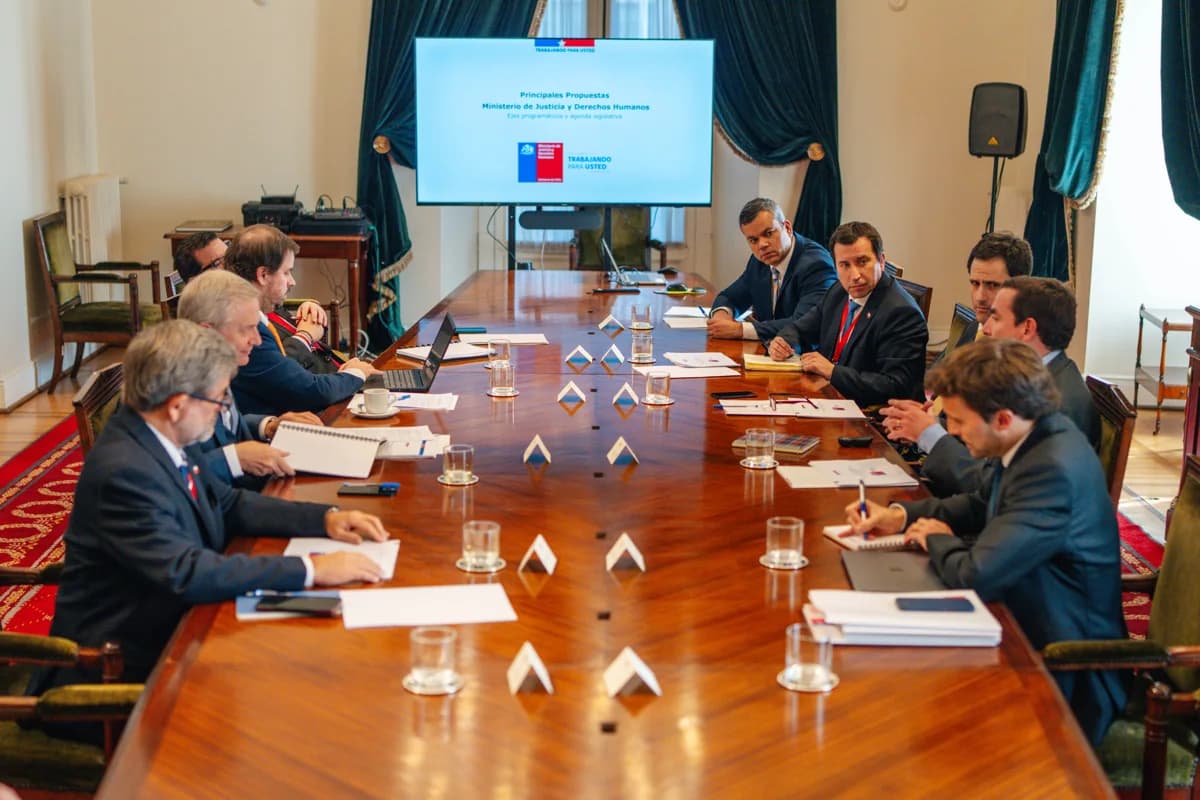
Rabat announced that this Monday at 10.30 he will host members of the Constitution, Security and Human Rights committees of the Senado (Chile's upper house) and the Cámara de Diputados (Chile's lower house) at the Ministry of Justice. According to the minister, the goal is to gather proposals to present a cross-party bill that would receive "immediate discussion in Congress."
Among those who confirmed attendance, Rabat mentioned Deputy Mulet, the chair of the Senate Security Committee and members of the upper house's Human Rights Committee, including Senator Matías Walker.