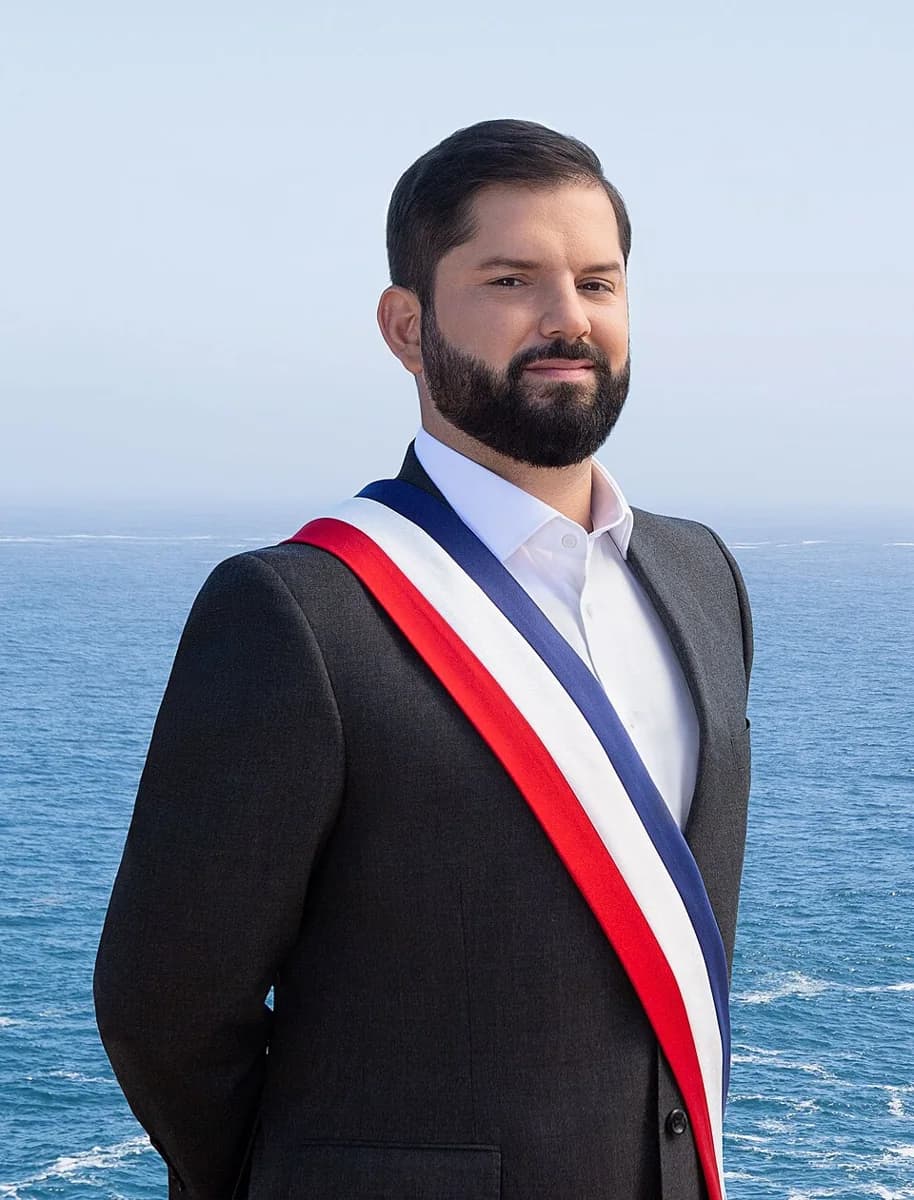

Former President Michelle Bachelet said this week in Panama City that women who enter Latin American politics suffer loneliness, lack of support and violence, whether they are on the left or the right. She made the remarks in an interview with the Spanish news agency EFE.
As reported by Cooperativa, Bachelet spoke in her role as vice president of the Club de Madrid, an international forum that brings together more than 130 former democratic heads of state and government from more than 70 countries. She previously served twice as president of Chile and was the first director of UN Women, the United Nations agency for gender equality.
"Women who go into politics have the same challenges, obstacles, problems," the former head of state said. She added that many feel alone and that their own parties do not stand by them when they face crises.
The reason for her visit was the Red Iberoamericana de Mujeres en Política (Ibero-American Network of Women in Politics), promoted by the Club de Madrid and UN Women. The network held its first in-person meeting in Panama, with representatives from 14 countries. Bachelet explained that the network seeks to exchange experiences, review which strategies have worked and offer mutual support.
The former president listed the obstacles: discrimination, stereotypes about their abilities, and verbal, physical and digital violence, the latter used to damage their image. On top of that, women still carry the burden of caring for their families.
Bachelet also distinguished between presence and effective control. "Parity is one thing and power is another," she said. In her view, many women achieve representation, but their colleagues and institutions do not hand them real power.
The figures support that assessment. According to UN Women, only seven countries in the world reach or exceed half of the seats held by women in their lower house or single-chamber parliament, among them Cuba, Nicaragua and Bolivia. In Latin America and the Caribbean, the average stands at 37%.
The gap is wider at the municipal level. Bachelet noted that women mayors account for only 16% in the region. And if the current pace continues, UN Women projects that equality in national parliaments would not be reached until 2063.
There is no consolidated regional data on gender-based political violence. However, Honduras recorded 74 cases between September 2025 and May 2026. Of these, 85.1% occurred while the victim was already in office and 67.6% had a digital component.
In Uruguay, a United Nations report indicated that four out of five women legislators elected in 2024 were attacked because of their work. A 2025 Ibero-American study, meanwhile, estimated that one in five social media interactions directed at women with a public profile is violent.
The statements come at a time when Bachelet remains present in the Chilean debate, even though she did not run in the 2025 presidential election. She closed her message with a thesis: according to her, democracy grows stronger and countries develop further when more women take part in politics with equal opportunities.