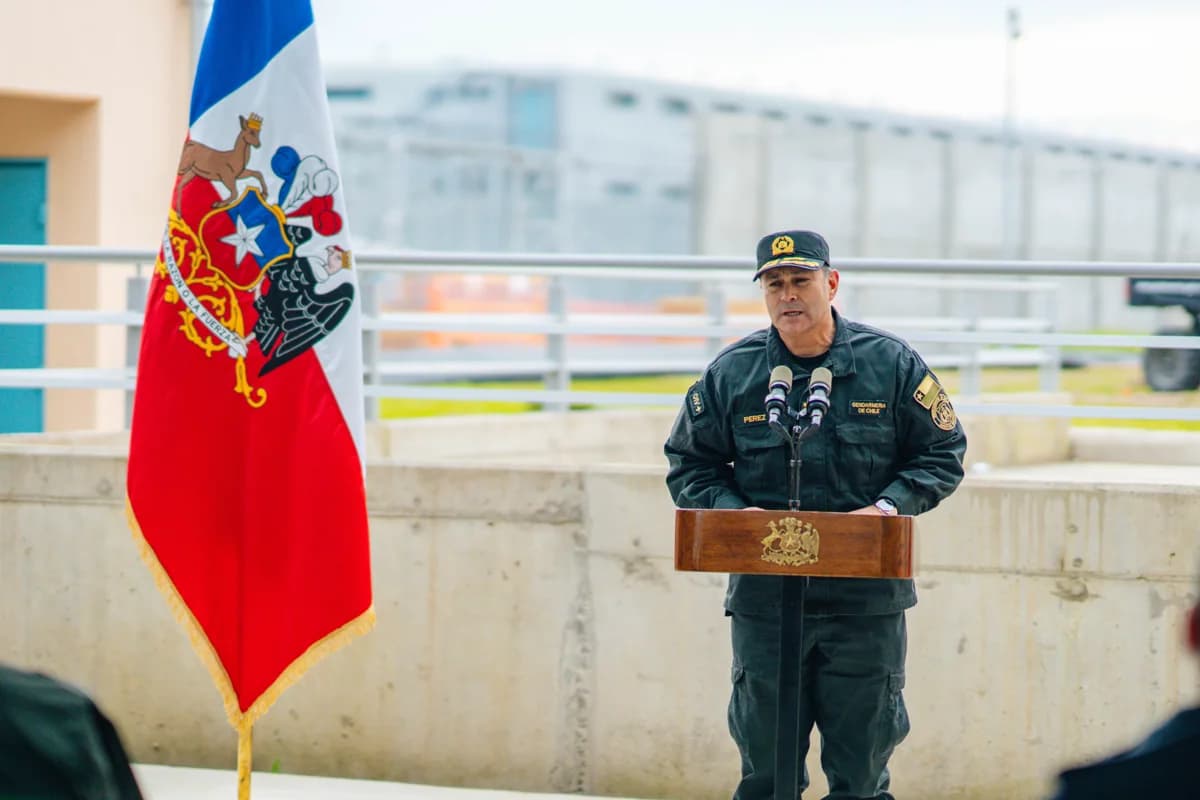

Claudio Alvarado, Minister of the Interior and Minister Secretary General of Government (Segegob), gave an update Tuesday night on the frontal system affecting central Chile. He described the damage as "minor impacts" but warned that "the emergency continues".
According to CNN Chile, rain was expected to continue into the early hours of Wednesday in some areas. Alvarado said he spoke with regional directors of the National Disaster Prevention and Response Service (Senapred) and presidential delegates from Coquimbo to Los Ríos.
The minister highlighted preventive work over the past week. First, the restoration of areas damaged by the October 8 debris flow in Las Condes. Second, Sunday's inspection of ravines that could become active with this new front.
"Safety perimeters were established, classes were suspended and the evacuation of some critical locations was verified," he explained. He also said that surges of water were less intense than expected.
Senapred's report lists 111 people affected: 103 in the Metropolitan Region, 8 in Coquimbo and 2 in Valparaíso. Those figures add up to 113, a discrepancy the source does not explain.
In the capital, the agency ordered preventive evacuations in the Ñilhue, Huallalolén and Quebrada Novillo Muerto areas of Lo Barnechea, and in the Valle Hermoso and El Sueño de Todos informal settlements in Puente Alto.
During the afternoon, Senapred activated the Emergency Alert System (SAE), which sends messages to mobile phones, for the Ribera del Río informal settlement in Talagante because the Mapocho River had overflowed.
The agency also reported six homes affected. One was destroyed in the Valparaíso Region and three were damaged in La Serena. Another is being assessed in Algarrobo after a tree and a high-voltage power pole fell on it.
Louis de Grange, Minister of Public Works and Minister of Transport and Telecommunications, said infrastructure protecting against debris flows "has held up well". On Sunday, he flew over the Metropolitan Region's seven main ravines.
De Grange reported that the Directorate of Hydraulic Works and the Municipality of Las Condes removed more than 30 thousand cubic meters of material from Quebrada Honda after the debris flow. The work extends from La Plaza Avenue to two kilometers upstream and will continue for 30 days.
The Roads Directorate has deployed 30 machines and 11 crews in the Metropolitan Region. Between Atacama and Biobío, the deployment totals around 500 machines and 54 emergency crews.
Alvarado confirmed that classes will resume this Wednesday, October 21, except at schools that lack the conditions to receive their students. Teams will continue monitoring Quebrada Honda and the Santa Marta and Santa Corina canals while the rain continues.