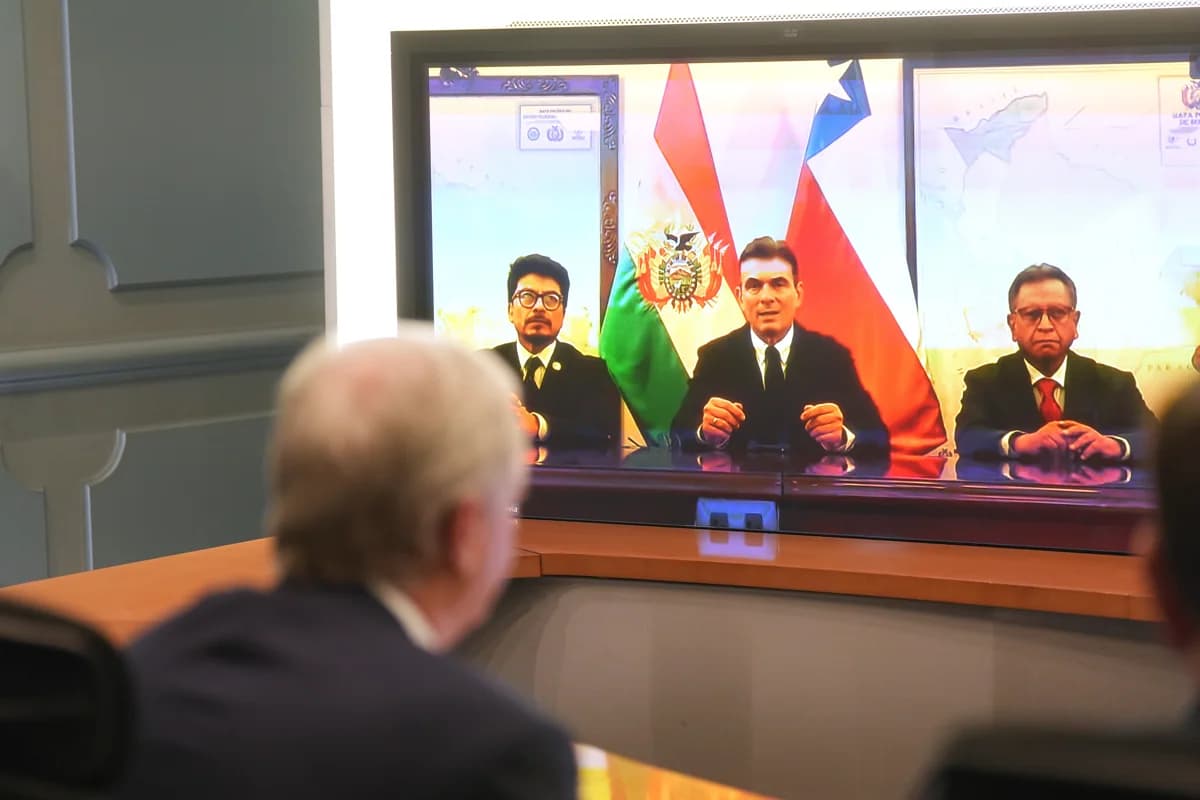
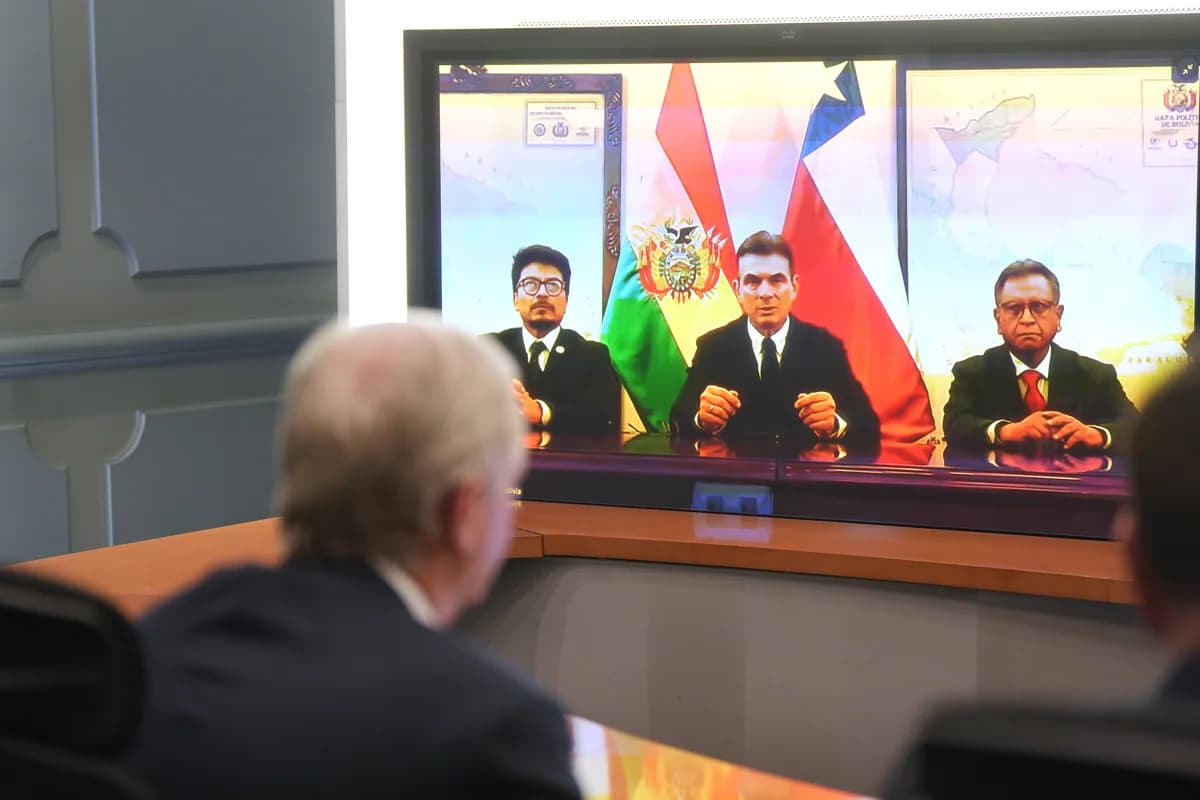
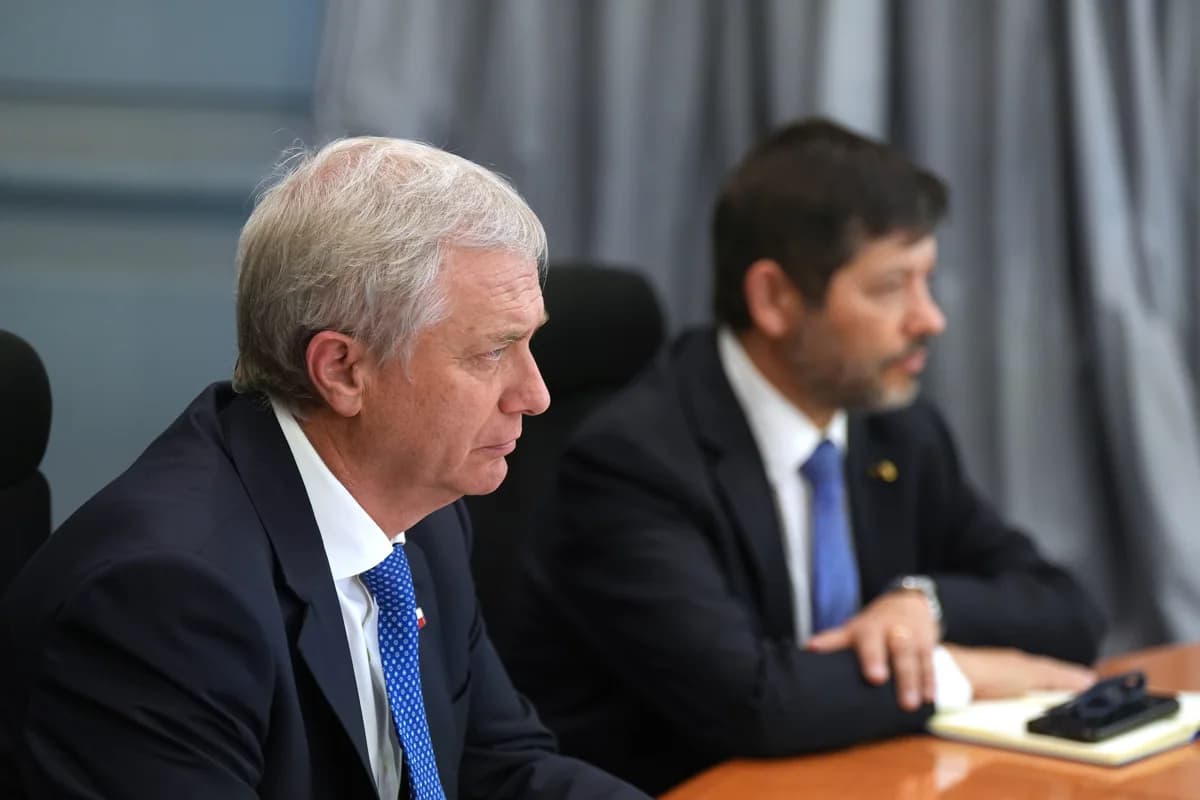
President José Antonio Kast arrives in Bolivia on a trip shortened from two days to one, according to El Mostrador. The government dropped the stop in Santa Cruz, where forestry business owners are demanding explanations over more than 100 containers of timber held in Arica as part of a drug trafficking investigation.
Much is at stake. Chile and Bolivia have gone 48 years without diplomatic relations at ambassadorial level. In addition, no Chilean president has made an official visit to La Paz since 1955. According to the outlet, the president's inner circle says reopening the embassies is one of the trip's objectives, although the matter has been handled in complete secrecy.
The agenda includes eleven topics for negotiation. Among them are railway projects, trade corridors, and mining and energy cooperation. However, the meeting with Bolivian President Rodrigo Paz will take place against the backdrop of an investigation by the Arica Public Prosecutor's Office into shipments of Bolivian timber contaminated with cocaine and ketamine. The controversy has already reached both countries' foreign ministries.
According to Bolivian sources cited by El Mostrador, a team from the Chilean Foreign Ministry's Protocol Office and Foreign Policy Directorate spent several days in Santa Cruz three weeks ago. They were looking for a hotel with the security measures needed for Kast to spend Friday night in Bolivia. They also coordinated a reception for the president with the local governor's office.
A diplomatic source told the outlet that a meeting with mining business owners and cattle ranchers had been scheduled for Saturday. The ranchers hoped to finalize an agreement to export Bolivian beef to Chile. In the end, the visit to Santa Cruz, the city where the affected business owners are concentrated, was canceled. The drug-contaminated timber has already been burned in Chile, as Chilean law requires.
The cancellation caused considerable anger in Santa Cruz. Bolivian diplomatic sources attribute the change to the dispute over drug-tainted timber. La Moneda acknowledges that some items on the agenda were still unconfirmed as late as the previous afternoon. The president's office also asked the delegation not to disclose key details of the trip.
Former Bolivian President Jorge "Tuto" Quiroga increased the pressure hours before Kast's arrival. Accompanied by Santa Cruz Governor Juan Pablo Velasco, he demanded that Kast clarify "the allegation about 108 tons of powder." He questioned the scientific basis of the investigation and called on Chile to present evidence or retract its claims, apologize and pay compensation.
Quiroga warned that the damage to Bolivia's reputation could spread to other export products. "Tomorrow it could be narco-quinoa, narco-tin," he said. According to El Mostrador, the Chilean Foreign Ministry considers another accusation more sensitive: that Chile allegedly violated the spirit of the Treaty of 1904, the peace and friendship agreement that guarantees Bolivia access to port facilities on the Pacific.
"If anyone should show Bolivia the utmost consideration, it is not Peru, it is not Brazil, it is Chile," the former president said. The outlet does not report whether Kast will respond to these complaints during his meeting with Paz. The outcome will become clear in a single day, without the stop in Santa Cruz.