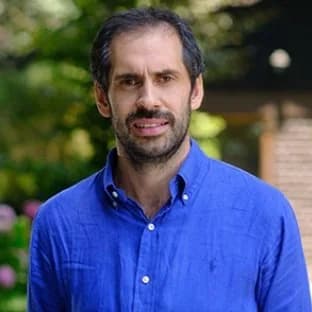
Former Finance Minister Nicolás Grau warned that, if the Chilean economy ends 2026 with negative growth, it would be the first time since 1990 that the country has contracted without a global crisis, according to Cooperativa. He made the remarks on the program El Primer Café, following another cut to the International Monetary Fund’s (IMF) forecasts. Cooperativa’s report does not specify the institution’s new figure.
"We are in a fairly exceptional situation," Grau said. In his view, a year of negative figures is "a likely scenario". He recalled that the Chilean economy contracted only during the Asian financial crisis, the subprime crisis (the United States mortgage collapse in 2008) and Covid.
The difference, he explained, is that neither the world nor economies similar to Chile’s are contracting today. The causes would therefore be "mainly idiosyncratic," meaning specific to what is happening within the country.
Grau spoke of a combination of factors and clarified that not all of them depend on the government. In January and February, specific shocks in mining and fishing reduced activity. However, he argued that "from March onward, a series of macroeconomic decisions were made" that amplified "very negatively" what was happening internationally.
Gustavo Díaz, an economist at Instituto Libertad, agreed with the negative assessment, although with a different emphasis. For him, the problem is structural: "An economy growing at close to 0 percent faces difficulties in every area." In practical terms, he added, low growth means fewer jobs and lower real wages, meaning less purchasing power for your salary.
Díaz argued that the country has gone some time without generating investment or reforms to promote growth, and that it is now "in the lowest growth range," including among developing countries.
Former Undersecretary of Finance Alejandro Micco described the figures as "quite discouraging." He described a vicious circle: consumers and businesspeople with very low expectations end up creating a "self-fulfilling prophecy of low growth." It is like a store where no one buys anything because everyone expects no one to buy anything.
Micco stressed that the external outlook is not so bad. He said the outlook for global growth and copper prices is now better than at the beginning of the year.
Pablo Eguiguren, director of Public Policy at Libertad y Desarrollo, pointed to politics. In his view, expectations also depend on what happens in Congress and on the need for broad agreements, because measures adopted with greater consensus would provide more stability.
Eguiguren lamented that the opposition "has not been so willing" and that the emphasis on growth toward the end of the previous administration "seems to have faded," which, he said, has made reaching a broad agreement more difficult.